
In brief
- Start the design process with the customer’s state and decision, not with a list of channels.
- Pass the content identifier and the original question between the page, CTA, messenger, and CRM.
- Separate a technical event, a commercial status, and a content signal instead of trying to store everything in a single metric.
- Build a journey with several relevant paths forward, because a B2B customer rarely moves along a strictly linear route.
A Funnel Is Not a Diagram of Arrows, but the Customer’s State
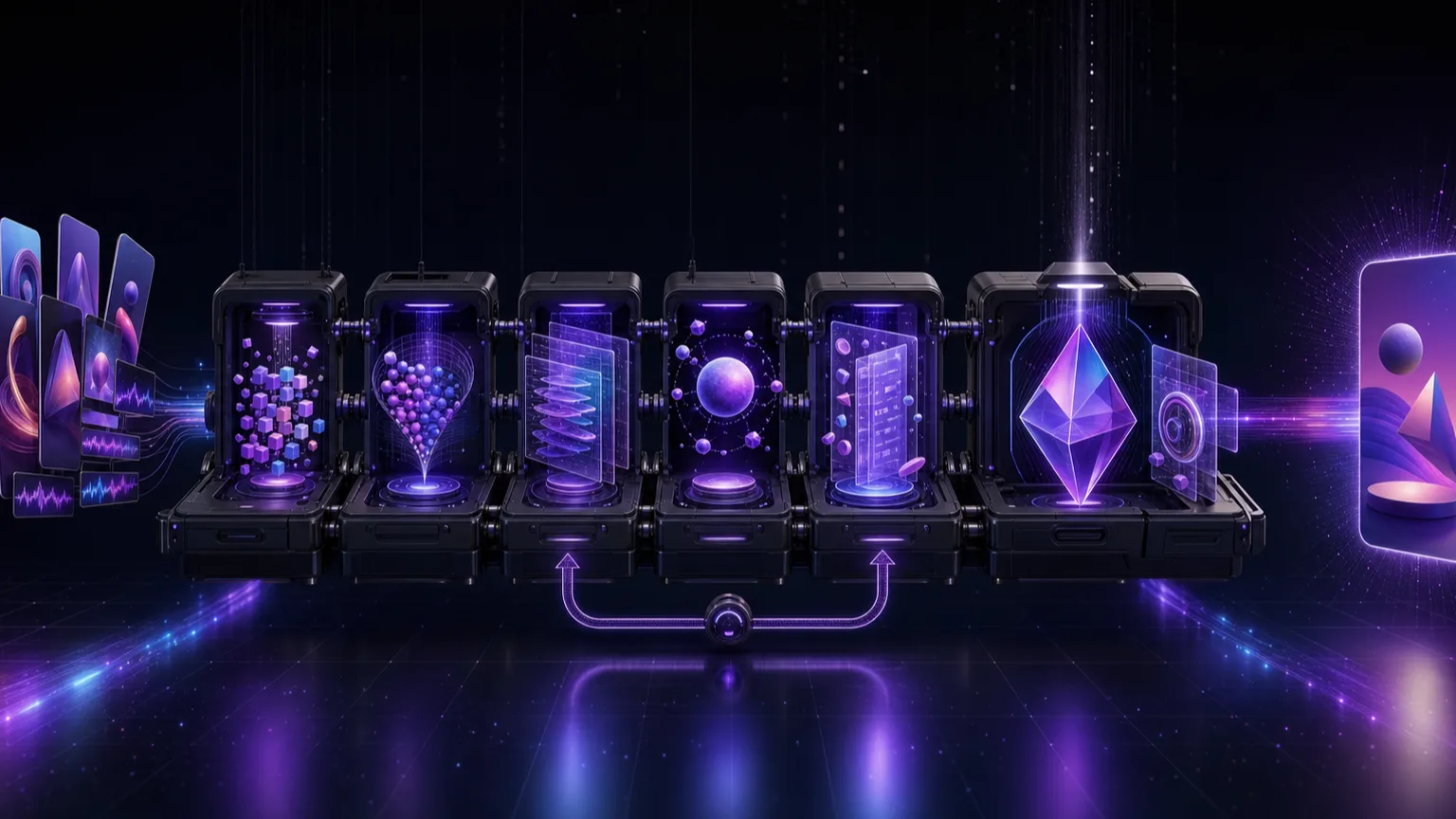
In presentations, a content funnel is often drawn as a sequence: query, article, lead magnet, email, inquiry, deal. In reality, a B2B customer returns through a bookmark, forwards the material to a colleague, reads a case study on another device, asks a question in Telegram, and may only then open the service page. A linear picture is useful as a guide, but the architecture must accommodate nonlinear behavior.
It is more practical to think in terms of state: what question the person is trying to resolve, what evidence they have already seen, how well-defined the task is, and what next step is available to them. A channel becomes a way to transition between states. An article helps the customer understand the issue, a case study demonstrates an implementation, a conversation clarifies constraints, and the CRM records the commercial continuation. If state is not transferred, every component starts the conversation from scratch.
This approach protects against pointless automation. There is no need to build dozens of emails simply because that is what people usually call a funnel. Sometimes the journey consists of one strong article, a relevant case study, and a substantive exchange. Another product may require a long series of explanations. The architecture is determined by the complexity of the decision, not by a marketing-tool template.
Start by Mapping Decisions
Before configuring analytics, list the decisions the customer makes along the way. For an automation service, these may include recognizing the problem, choosing a process, deciding between an off-the-shelf and a custom tool, assessing integrations, agreeing on the team’s role, and selecting a provider. Every decision has an initial question, supporting evidence, and a possible next step.
| State | Main Question | Useful Content | Next State |
|---|---|---|---|
| The problem is not yet defined | Why does the process constantly require manual oversight? | A diagnostic article and examples of symptoms | The boundaries of the process are clear |
| Approaches are being compared | Does the business need automation, AI, or a change in operating procedures? | A decision matrix and constraints | A class of solution has been selected |
| The solution is being evaluated | How does it work with data and integrations? | An architectural breakdown and a case study | Requirements have been defined |
| A provider is being selected | Can the team implement the solution safely? | The delivery process, case studies, and diagnostics | A substantive conversation has begun |
A decision map reveals gaps better than a publishing calendar. The company may talk extensively about the problem but fail to explain how to compare possible approaches. Readers then pay attention, but look elsewhere for selection criteria. Or case studies may exist without being connected to customer questions, making them look like a gallery rather than evidence.
The Minimum Architecture from Search to CRM
-
01
Search Landing Page
The article has its own search intent, a canonical URL, a clear heading, internal links, and a measurable CTA with a slug identifier.
-
02
Web Analytics
The system records the entry page, transitions, the selected action, and campaigns without sending unnecessary personal data.
-
03
Contact Point
A form or messenger accepts the question and preserves the content label in a hidden field, a parameter, or the initial message.
-
04
Integration Layer
A webhook or server-side handler validates data, prevents duplicates, and passes on a normalized event.
-
05
CRM
The record stores the original source, the latest touchpoint, the question, related content, qualification status, and change history.
-
06
Feedback
The sales team records lead quality and actual questions so the editorial team can improve the content and the next step.
Not every component has to be implemented at once. An initial version can pass the slug to Telegram and save it in the CRM manually. The important thing is to define a stable identifier in advance and avoid overwriting the original source. Automation can then be expanded without breaking compatibility.
In the Lead Generation case study, two workflows—inbound content and outbound search—use a shared data model. This is an example of mature architecture, but the principle also applies to a small process: different channels need a shared entity record and event history, or their reports will contradict each other.
What Data Should Be Passed Between Stages
An integration becomes more reliable when an event has an explicit contract. It separates a technical fact from its marketing meaning. For example, “link clicked” is an interface event, “conversation about automation selected” is an intent, and “lead qualified” is a sales decision. Mixing these levels creates an attractive but unreliable funnel.
- event_id to protect against processing the same event more than once;
- occurred_at with the time zone, and source_system;
- anonymous_id or an authorized contact_id without passing sensitive data in the URL;
- landing_url, article_slug, and first_known_source;
- cta_id, service_slug, and the user’s question;
- consent_state if processing depends on consent;
- crm_entity_id after the record has been created or matched successfully.
The fields do not have to use these exact names, but their meaning must remain stable. A campaign parameter should not be used both for an advertising campaign and for an article title. Free text should not replace an identifier. It is useful to specify the contract version when several services evolve independently.
Duplicates, Lost Data, and Other Failures
A webhook may arrive more than once, a user may click the button several times, or the CRM may temporarily fail to respond. If every call creates a new lead, the team will see duplicates and lose trust in the data. The handler must therefore be idempotent: a repeated event with the same identifier returns the known result instead of creating a new entity.
| Failure | Consequence | Safeguard |
|---|---|---|
| Repeated webhook | Multiple records for the same inquiry | A unique event_id and processing log |
| CRM unavailable | The inquiry disappears after the form is submitted | A queue, limited retries, and an operational notification |
| A required field is missing | The record is created without a source | Contract validation and event quarantine |
| The contact already exists | History is split across entities | A matching rule and a new touchpoint added to the existing record |
| UTM data overwritten | The original source is lost | Separate first_touch and last_touch fields |
An error must be visible to the person responsible. A log without a notification will not recover a lost inquiry. For a small flow, a daily comparison of submissions and created records is enough. An automated system needs queue metrics, alerts, and the ability to retry processing safely.
When a Funnel Needs a Conversation
Static content answers recurring questions, but every specific situation includes details. A conversational layer is useful when a customer needs to clarify whether a solution applies, while the team wants to preserve context. It must not make unfounded promises: answers are limited to approved knowledge, the conversation history is retained, and important decisions are handed over to a person.
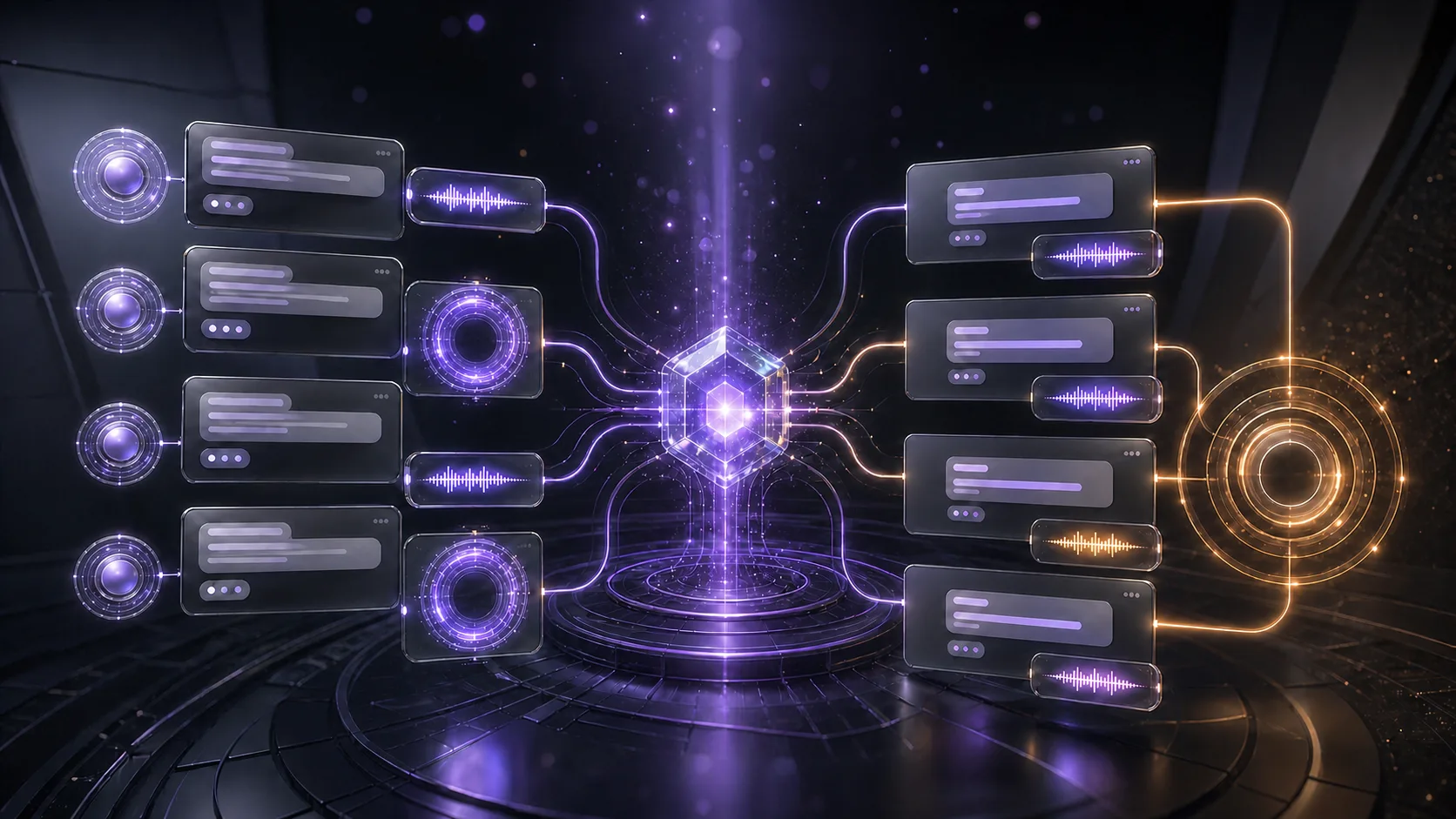
The AI Sales Funnel case study demonstrates the separation of a prepared scenario from a GPT-powered conversation. The scenario controls the sequence of ideas and media, while the conversational component answers open-ended questions within the context of the product and the current stage. This separation is more useful than attempting to replace the entire funnel with a single universal chatbot.
- A base of approved facts and explicit restrictions against unsupported promises.
- The contact’s state and a history of content already shown.
- Criteria for handing the conversation over to a person: a commercial question, a sensitive topic, or low confidence.
- The original article and selected CTA preserved in the record.
- The ability to update scenario content without rewriting the integration.
Measurement Without False Precision
An end-to-end journey does not mean that every contribution can be attributed precisely. Cookies are limited, devices change, colleagues forward links, and some decisions happen outside digital systems. The role of analytics is to provide a picture reliable enough to support a decision, not to create mathematical certainty where the data does not exist.
- Search layer: target queries, landing pages, impressions, and clicks.
- Content layer: transitions along the internal journey and selected CTAs.
- Contact layer: submitted questions, preserved sources, and technical errors.
- CRM layer: qualification, stage, reason for rejection, and outcome of the conversation.
- Qualitative layer: what content the customer remembered and what helped them take the next step.
Do not declare an article effective simply because the most recent inquiry came from its URL. Compare sets of observations and read the inquiries themselves. If the material attracts the right questions but produces few CTA clicks, a different format for the next step may be needed. If there are many clicks but the tasks do not match the service, the promise needs to be clarified.
A Launch Plan in Four Short Cycles
-
01
Inventory
Map articles, services, case studies, CTAs, forms, and CRM fields. Find the transitions where the source or question disappears.
-
02
Minimum Connection
Select one cluster and one CTA, pass the slug to the contact point, and save it in the CRM together with the question.
-
03
Reliability
Add validation, duplicate protection, an event log, error retries, and reconciliation against the records actually created.
-
04
Feedback
Agree with the sales team on shared qualification reasons and regularly feed customer questions back into the editorial plan.
After that, extend the journey to related content and channels. Do not begin by fully automating every touchpoint: without a proven contract, automation will only replicate errors faster. A content funnel becomes an asset when its state is observable, transitions are explainable, and a new article can be connected according to shared rules.
A good funnel does not force the customer to follow a line drawn on a diagram. It preserves meaning, no matter which route brings the customer to the conversation.
Frequently asked questions
Does a content funnel need a separate CRM?
Usually not. The important thing is to define the required fields, touchpoint history, and integration rules within the existing system. A custom CRM is justified when an off-the-shelf data model cannot support a critical process, not simply for storing tags.
Can an article be connected to Telegram without a form?
Yes. The start link can pass a safe article label and prewritten context. You need to check the platform’s limitations, avoid including personal data in the URL, and preserve the label after the conversation begins.
Which matters more: the first-touch or last-touch source?
They answer different questions, so it is useful to store both and preserve the history. The original source shows the beginning of the known journey, while the last source shows the immediate transition to the current action.
Where should a business with low traffic begin?
Connect one priority article cluster to one meaningful CTA and a source field in the CRM. Manually reviewing a small number of inquiries will provide more value than complex automation without data.
Sources
- Google Analytics: Collect campaign data with custom URLsChecked 30 July 2026
- Google Search Console: Performance reportChecked 30 July 2026
- Yandex Metrica: URL tagsChecked 30 July 2026