In brief
- An inquiry appears when an article answers a real question, reduces uncertainty, and offers a next step that matches the reader’s readiness.
- Expertise is demonstrated through decisions, constraints, methodology, and verified cases rather than broad claims.
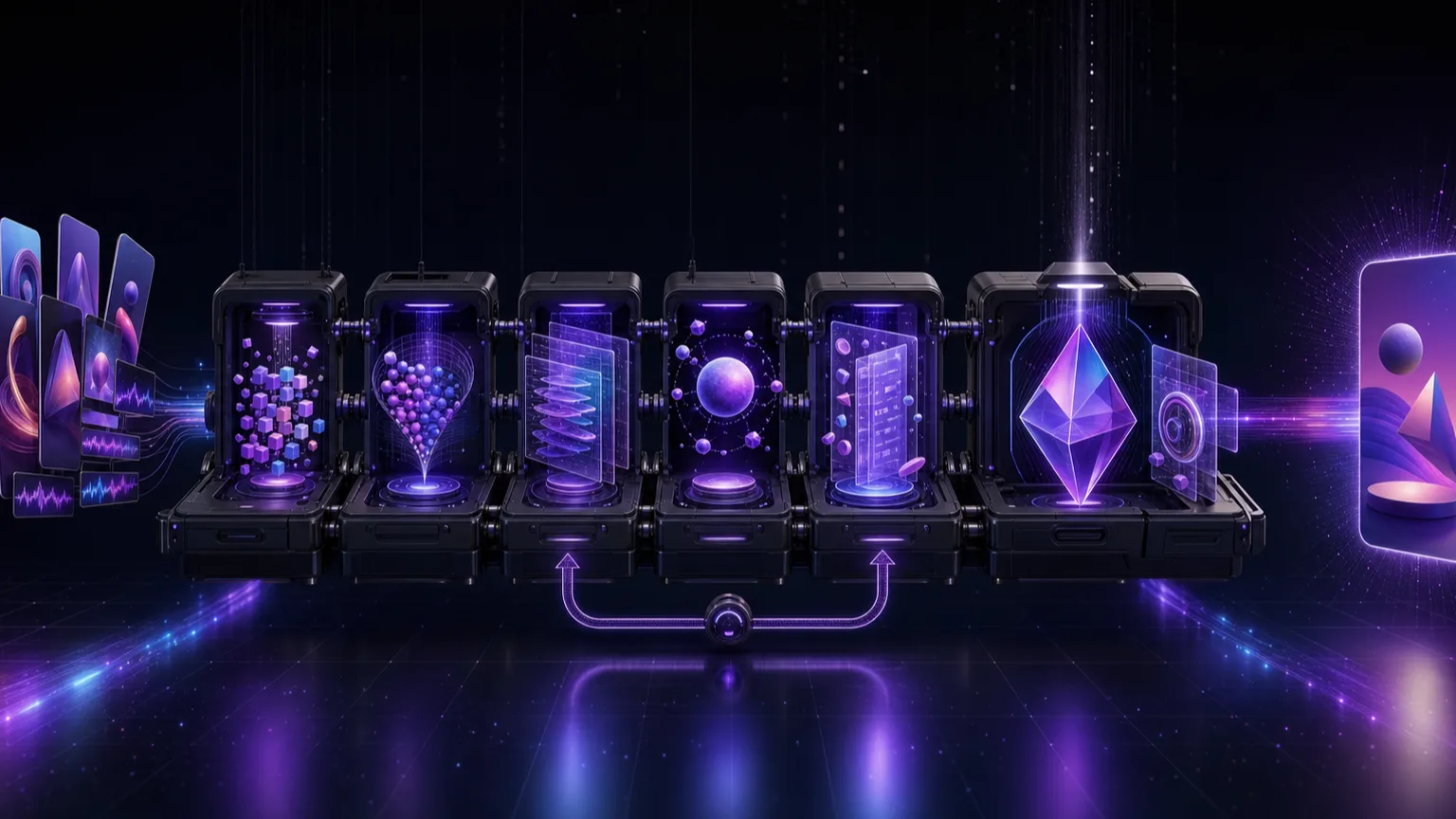
- The path after the article must be designed: an internal link, a relevant case, a service, a low-pressure call to action, and preservation of the content source tag.
- Article quality should be evaluated by search intent alignment, continuation of the journey, and the substance of inquiries, not only by view count.
An Inquiry Begins Before the Button Is Clicked
For a complex B2B service, an article rarely closes a deal directly. It does more realistic work: it helps define the problem, compare approaches, identify constraints, and decide whether a conversation is worth continuing. If, after reading, a person can describe the task more precisely, they arrive not with an abstract “how much does it cost?” but with context. That is already a commercial outcome, even though no contract has been signed yet.
The journey breaks when a publication is optimized only for the incoming query. The reader gets an answer but does not understand what to do next, whom to trust, or whether the approach applies to their situation. The other extreme is promotional copy that moves from the question to a sale too quickly and provides no standalone value. A strong article maintains the balance: it fully solves the informational task and opens a logical path forward.
That is why conversion cannot be fixed with a single bright call to action (CTA). If the material does not match the reader’s situation, demonstrate practical experience, or leads to a generic home page, the button only highlights the disconnect. The entire sequence must be designed—from the query to the context the team receives after the inquiry.
Start with a Question That Can Lead to a Next Step
Not every visit is equally close to an inquiry. A person searching for the definition of a CRM and an executive comparing an off-the-shelf system with a custom one are at different stages. Both queries can be valuable, but they call for different expectations. In the first case, the goal is to help the reader understand the subject and offer a related article. In the second, you can present selection criteria, an integration case, and an opportunity to discuss the architecture.
| Intent | What the Reader Needs | The Article’s Role |
|---|---|---|
| Understand | Understand the concept and recognize the problem | Provide a clear model and language for further research |
| Compare | See the options and trade-offs | Show criteria, boundaries, and selection scenarios |
| Plan | Assess stages, inputs, and risks | Provide a project roadmap and checklist |
| Evaluate a provider | Understand the provider’s competence and way of working | Connect the methodology with a verified case |
| Begin | Clarify whether the approach applies to their situation | Offer a specific format for an initial conversation |
Search results help verify how search systems interpret a query, but they do not replace knowledge from sales. The SERP should be compared with the wording used in calls and the CRM. If suitable clients repeatedly ask a question while the search results answer it superficially, there is an opportunity to create material with an original decision-making framework.
When choosing a topic, Agentix Labs records not only the primary query but also the moment at which it arises. This record determines the depth, evidence, and next step. Without it, the author can easily drift into a general overview that attracts a broad audience but does not help with a specific decision.
What Makes an Article Expert-Led
Expertise is not about complex words or a confident tone. Readers need signs that the author has dealt with real constraints: they can distinguish between scenarios, explain the reasons behind a decision, show the sequence of work, and honestly identify where an approach does not fit. General advice is easy to retell; a practical model helps people make a decision.
- A decision matrix with criteria, rather than universal advice for every company.
- An implementation sequence with inputs and checkpoints.
- An analysis of a common mistake and the mechanism that causes it.
- A verified case fragment without invented figures or results.
- A boundary of applicability: when the solution in the article would be excessive or risky.
- Verifiable external claims linked to primary sources.
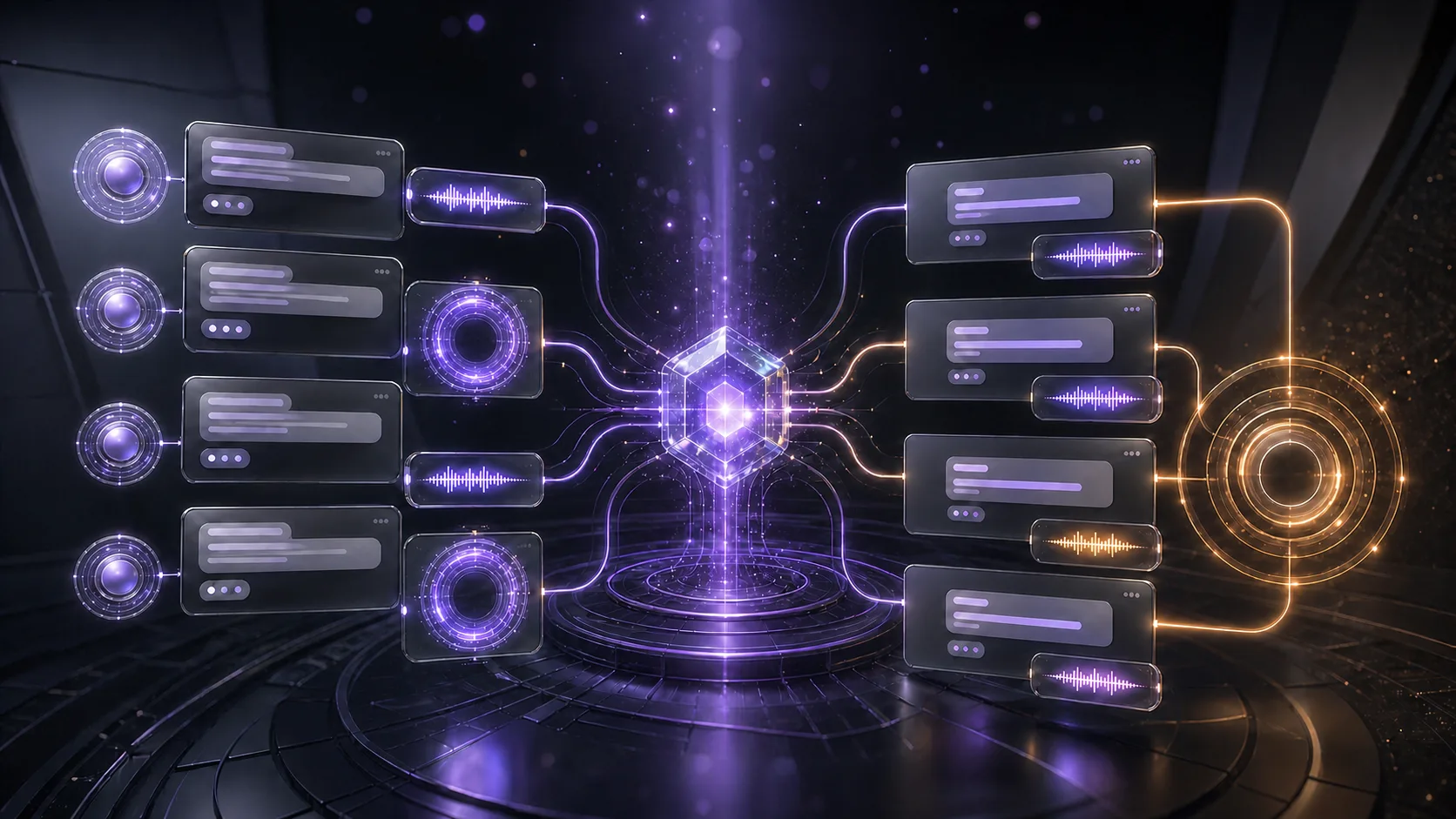
For example, the AI sales funnel case does not demonstrate an abstract ability to “do marketing with AI,” but a specific architecture: a prepared scenario, an individual contact state, different media formats, and open dialogue within the product context. In an article, this fact can explain why content and conversation must be connected, but it does not justify claiming an unverified increase in conversion.
Evidence does not answer the question “how loudly can we make a claim?” It answers the question “which part of the solution can we genuinely demonstrate?”
A Structure That Leads to a Well-Informed Decision
-
01
A recognizable situation
The first screen confirms that the material understands the reader’s question and promises a specific outcome without sweeping guarantees.
-
02
A model of the problem
The author explains why the difficulty arises, which parts of the system affect it, and why the obvious answer may not work.
-
03
A way to solve it
The main section provides a sequence, criteria, examples, and tools that the reader can use independently.
-
04
Constraints
The text shows the conditions under which the approach applies, the required data, the risks, and the situations that call for a different approach.
-
05
Evidence
A case or demonstration confirms the ability to deliver what is described without replacing the method with a promotional story.
-
06
The next step
The reader gets a choice: continue learning, review the service, or describe the task for a brief diagnostic.
The sequence does not have to be identical in every article, but the logic must remain. If a CTA appears before the reader understands the risks and criteria, the inquiry feels premature. If the evidence is hidden at the end of an enormous block of text, the person may never reach the answer to their main concern. A table of contents, subheadings, and concise takeaways let readers choose the depth they need.
It is especially important to provide the answer near the beginning and then expand on the details. A search-oriented article should not create artificial suspense. An executive can read the conclusions, send the table to a colleague, and return to the architecture section later. This nonlinear use increases practical value and makes the material convenient for the client’s team.
How to Choose a CTA Without Pressure
The call to action should continue the task the article has just solved. After an article about choosing an approach, it is appropriate to offer to test that choice against the reader’s situation. After a technical checklist, offer an audit of the current system. After an early-stage educational article, offer a related analysis. “Submit an inquiry” does not explain what will happen or what value the contact will provide.
| Readiness | Suitable CTA | What to Promise |
|---|---|---|
| Low | Continue to a related article | The next necessary level of understanding |
| Moderate | Review a relevant case or service | An implementation example and the potential scope of work |
| High | Describe the task in Telegram | A brief review of the situation and identification of the next step |
A good CTA lowers the cost of the first contact for the reader. There is no need to demand a technical specification, a budget, and a long questionnaire when the task is still taking shape. It is enough to invite the person to send context: what is happening now, what outcome is needed, and what has already been tried. The team responds within the stated format instead of beginning with a pushy sales pitch.
Carry the Article Context into the Inquiry
The source and topic must not be lost after the click. A Telegram link or form should pass a clear content tag, such as blog_how-expert-article-brings-leads. The CRM stores the entry URL, campaign, first known question, and subsequent touchpoints. This helps the manager continue the conversation from the point where the reader finished their independent research.
In the “Lead Generation” case, the content and lead generation flows share a common database. The principle also applies to a simpler system: analytics shows the journey, the CRM stores the commercial state, and messages record the actual conversation. There is no need to build a complex platform immediately, but the source identifier must survive the transition between components.
- The URL and slug of the article that preceded the inquiry.
- The first and last known sources, without overwriting the history.
- The selected CTA and related service.
- The question the person sent with the inquiry.
- Qualification status and the reason if the conversation did not continue.
- A manual note from the manager on whether the material helped the conversation.
This transfer is needed for more than reporting. It improves service: the manager can see which model the person has already studied and does not repeat the basics. The editorial team, in turn, learns which articles generate relevant questions and where readers misunderstand the promise.
Which Metrics to Monitor
Views answer only the question of distribution. A commercial article needs signals across the entire chain: visibility for the target intent, entry quality, continuation of the journey, inquiries, and qualification results. Absolute values should not be compared without context: a narrowly focused article for an executive may receive less traffic but create more substantive conversations.
- Impressions and clicks for queries that match the stated task.
- Visits to related cases, services, and subsequent articles.
- CTA launches with the article’s specific tag.
- The share of inquiries in which the original question was preserved.
- Qualification of inquiries using consistent criteria rather than subjective impressions.
- Questions asked after reading that reveal a gap or a false expectation.
Causality should be assessed carefully. A person may have read several articles, returned directly, or received a link from a colleague. It is therefore useful to combine technical attribution with a simple question during the conversation: what helped you decide to get in touch? The answer is not always perfectly precise, but it adds to the journey what analytics cannot see.
Why an Article May Fail to Generate Inquiries
| Symptom | Likely Cause | What to Check |
|---|---|---|
| No target impressions | The topic or wording does not match search intent | The search results, heading, structure, and technical indexability |
| Impressions but few visits | The snippet promises the wrong answer or loses to clearer pages | The title, description, and alignment with the primary question |
| People read but do not continue | There is no evidence or suitable next step | The case, internal links, CTA, and service boundaries |
| Inquiries are irrelevant | The material attracts too broad an audience or overpromises | The reader role, constraints, and wording of the outcome |
| The source is lost | The transition is not tagged or the CRM overwrites the data | Tags, integration, touchpoint history, and card fields |
The specific break in the chain is what needs to be fixed. Rewriting the entire article will not help if a bot removes the source tag. A new CTA will not solve the problem if the article answers the wrong question. Stage-by-stage diagnostics preserve the strong parts of the material and make it possible to apply small, verifiable changes.
An expert article generates an inquiry when it is part of a system: the question is validated, the answer provides original value, the evidence is honest, the transition matches the reader’s readiness, and the context reaches the team. Publication itself is only one point in that chain.
Frequently asked questions
How long does an article need before it starts generating inquiries?
There is no universal timeframe. Indexing, competition, demand, website quality, and existing authority vary. First, verify technical accessibility and query alignment, then monitor impressions, visits, and the substance of inquiries without promising a fixed result.
Does the article need an inquiry form within the page?
Not necessarily. Related articles and cases work better for early-stage intent; for more mature intent, provide a clear way to describe the task. It is important to preserve the source and explain what will happen after contact.
Can results be measured only by the last click?
The last click shows a single moment in the journey and may undervalue early-stage content. Combine touchpoint history, the specific article tag, lead qualification, and a question to the client about what influenced the inquiry.
Should a service offer be added to every section?
No. Repeated selling interferes with solving the informational task. Natural internal links, relevant evidence, and one clear next step that matches the reader’s readiness are enough.
Sources
- Google Search Central: Creating helpful, reliable, people-first contentChecked 30 July 2026
- Google Search Central: Links best practicesChecked 30 July 2026
- Google Analytics: Collect campaign data with custom URLsChecked 30 July 2026