
In brief
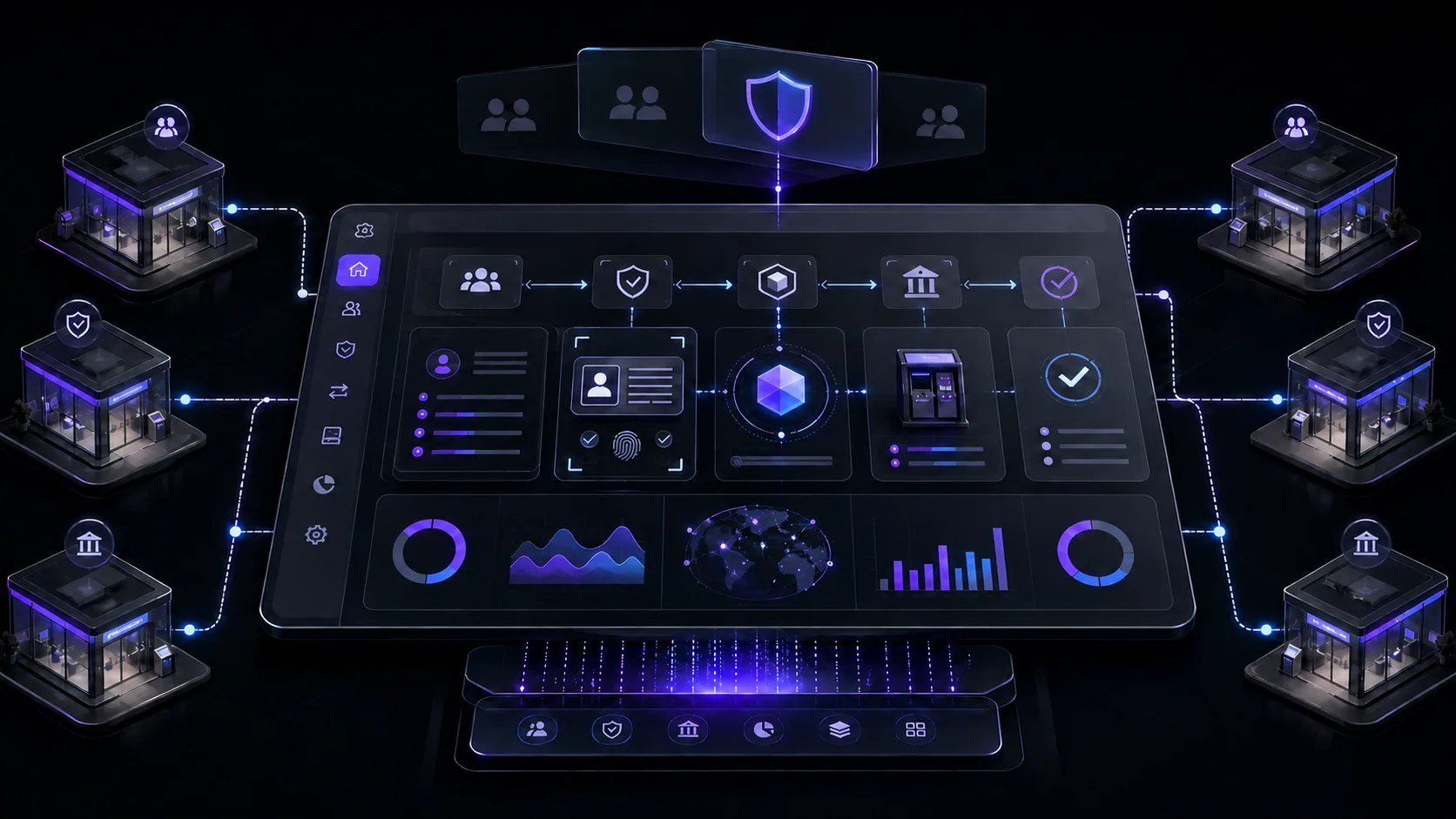
- The CRM or a separate domain layer should own the customer, deal, and business status, while channels should deliver events and display the permitted view of the data.
- Every incoming event receives a stable identifier, so repeated delivery does not create a second lead, payment, or task.
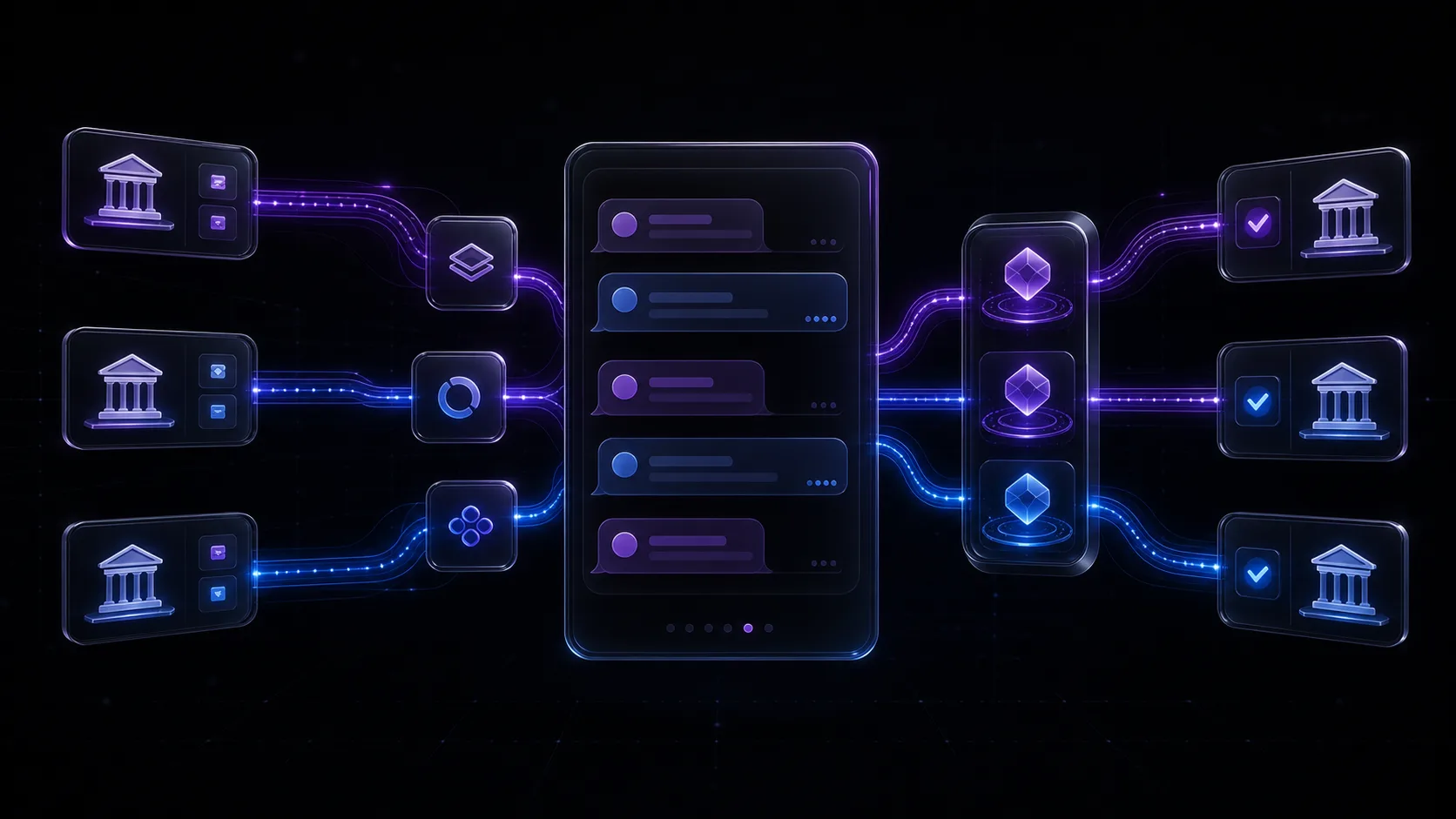
- The integration is built around clear events and state transitions, not direct synchronization of every system with every other system.
- Logs, metrics, and tracing are designed together with the handlers: without observability, automation only hides errors faster.
Why a Collection of Ready-Made Connectors Quickly Becomes Unreliable
At first, the setup looks simple: a website form creates a contact in the CRM, a Telegram bot sends a message to a manager, email stores the correspondence, and the payment service reports a successful payment. While there are few requests, employees correct mismatches manually. Then the same lead arrives through both the form and Telegram, an email is attached to the wrong contact, a payment is confirmed before the deal is created, and a repeated webhook triggers the action again.
The cause is usually not a particular CRM or messenger. The problem appears when systems are connected point to point and each stores its own version of the truth. The website considers the form submitted, the CRM has not yet created the record, the bot has already messaged the manager, and the payment provider repeats event delivery after a timeout. The team sees five screens, but none provides a complete answer: what happened to the customer, and which action is expected now?
- One contact is created several times because different phone numbers, email addresses, or Telegram accounts are used.
- A deal status changes in a channel but does not reach the CRM, or it is overwritten by an outdated event.
- A manager receives a notification even though the transaction that creates the lead has failed.
- A repeated payment webhook triggers a second delivery of a product, access, or an internal credit.
- The error is discovered through a customer complaint because the technical logs are not linked to the specific lead.
Define a Single Source of Truth
A single source of truth does not mean that all data must physically be stored in one database. The payment provider remains the owner of the fact that money moved, the email service owns the original email, and Telegram owns the message and chat identifier. But the customer's business state must have one owner: usually the CRM, or a separate server-side layer if the process is more complex than an off-the-shelf CRM can support.
The owner of the business state stores the customer record, the links between the customer's identifiers, the lead or deal, the current stage, confirmed payment facts, and the transition history. The other systems do not assign the final status on their own. They report an event, after which the central layer checks the rules, saves the change, and only then initiates the next actions.
| Object | Recommended owner | What other systems receive |
|---|---|---|
| Customer and identity links | CRM or server-side layer | Internal customer_id and permitted contact details |
| Lead or deal | CRM | Stable lead_id or deal_id and the current permitted status |
| Payment | Payment provider and local ledger | provider_payment_id, amount, currency, and confirmed status |
| Telegram message | Telegram | chat_id, message_id, and a link to customer_id |
| Email service | message_id, thread_id, and a link to the customer or deal |
Describe the Integration Through Events and Commands
A resilient design begins with a concise event vocabulary. An event reports a fact that has already occurred: lead.created, message.received, payment.succeeded. A command requests an action: crm.create_lead, telegram.send_message, email.send. This distinction prevents intent from being confused with an outcome. If sending an email fails, the command remains incomplete and the email.sent event does not appear.
Every record should contain an event_id, type, occurrence time, source, schema version, business object identifier, and a payload containing only the required data. A common format simplifies routing and diagnostics. The CloudEvents specification demonstrates a general approach to describing events, but an internal contract can be simpler if its names and required fields are fixed in documentation and tests.
| Event | Producer | What the central layer does |
|---|---|---|
| lead.created | Website or Telegram | Normalizes contact details, looks for a match, and creates or enriches a lead |
| message.received | Telegram or email | Links the message to the customer and records the expected action |
| deal.stage_changed | CRM | Checks whether the transition is permitted and creates the required notifications |
| payment.succeeded | Payment provider | Verifies the signature, amount, order, and whether the event has already been processed |
| delivery.completed | Fulfillment service | Stores the result and notifies the customer through the selected channel |
- Version the payload so that field changes do not break older handlers.
- Do not pass secrets or unnecessary personal data through every event.
- Store the original event or a safe snapshot of it for later reprocessing.
- Record causality: which event produced the next command.
Connect the Identifiers That Belong to One Customer
One person may have a phone number from a form, an email address from correspondence, a Telegram user_id, and a customer_id in the payment system. Automatically merging records by name alone is dangerous, while matching by phone number is not always unambiguous: the number may have changed, be shared, or be recorded in a different format. This is why you need an internal customer_id and a table of confirmed external identifiers.
-
01
Normalize the contact detail
Convert phone numbers to a single format, normalize email according to the accepted casing and storage rules, and store the Telegram user_id separately from the username.
-
02
Find a confident match
Use a confirmed identifier or a predefined combination of attributes, not an approximate name similarity.
-
03
Create the link
Store the external identifier alongside the internal customer_id, source, and confirmation time.
-
04
Send uncertainty for review
If several possible records are found, do not merge them silently: create a task for the responsible employee.
Emails are linked in a similar way. The From field helps identify a candidate, but the thread should account for the email provider's Message-ID and thread_id. A new email from a shared corporate address may refer to a different deal, so it is useful to include a stable lead identifier in service headers, the reply address, or a safe link tag.
Protect the Process from Duplicates and Out-of-Order Events
A webhook cannot be treated as a one-time call. The sender may retry delivery if it does not receive a timely successful response, and the network may fail after your operation has already completed. Telegram describes repeated webhook delivery after an unsuccessful response, while Stripe recommends accounting for duplicate events. Therefore, the handler must be able to accept the same fact more than once safely.
Idempotency means that repeating a request with the same key does not create a new business outcome. It is not a universal switch: the key must be associated with a specific operation, and the result of the first attempt must be stored. For a payment event, the provider's event identifier usually serves as the key; for a form submission, it is a request_id created on the client; for an internal command, it is a command_id.
-
01
Verify authenticity
Verify the webhook signature, the request source, and the permitted time range before changing business state.
-
02
Register the event
Atomically store the unique event_id. If the record already exists, return the previous safe result without repeating the action.
-
03
Check the current state
Confirm that the order exists, the amount and currency match, and the status transition is permitted at this exact moment.
-
04
Record the change and tasks
In one transaction, change the business state and record the outgoing commands that a worker will pick up later.
-
05
Respond quickly
Acknowledge receipt after durable recording, without keeping the external webhook open while emails are sent or access is provisioned.
Event ordering cannot be assumed either. A payment may be confirmed before the asynchronous handler finishes creating the deal, and an old status message may arrive after a new one. The handler must check the object version or whether the transition is permitted. An event must not overwrite the CRM unconditionally merely because it was delivered later.
Make Errors Visible and Recoverable
An integration should be considered operational not when one test scenario succeeds, but when the team can understand the cause of any failure and continue the process safely. This requires bounded retries, a separate queue for unresolved events, a ledger of business transitions, and clear alerts. Endless automatic retries are dangerous: a data error will keep repeating, create load, and hide the need for a manual decision.
OpenTelemetry identifies traces, metrics, and logs as separate observability signals. In an application integration, trace_id and correlation_id connect traces, logs, and business events: they let you follow the path from the website form through deal creation, the manager notification, payment confirmation, and the email to the customer. Metrics show aggregates, while individual measurements can be linked to traces through exemplars when needed. Payment secrets, bot tokens, and complete personal data must not appear in logs.
- Metrics: number of accepted events, errors, retries, processing latency, and queue size.
- Tracing: the path of a single correlation_id through the API, queue, CRM adapter, and channels.
- Business ledger: who changed the deal or payment status and which event justified the change.
- Dead-letter queue: events that could not be processed after a bounded number of attempts.
- Alerts: a rise in errors, missing expected events, and a stage exceeding its permitted duration.
Implement the Integration One End-to-End Scenario at a Time
Trying to automate all forms, messages, emails, and payment types at once expands the failure surface. It is more reliable to choose one important journey, for example: website lead — qualification in the CRM — payment link — payment confirmation — notification to the customer and manager. This journey provides a foundation for identifiers, statuses, logs, and error handling that can then be extended.
-
01
Describe the current process
Record the channels, responsible roles, manual transfers, statuses, exceptions, and places where the customer waits for a response.
-
02
Assign data owners
For the customer, lead, correspondence, payment, and result, define the authoritative system and update rules.
-
03
Agree on the deal state model
Keep only meaningful stages and explicitly describe the permitted transitions, including cancellation, dispute, and manual review.
-
04
Define the contracts
Describe events, commands, required fields, idempotency keys, signatures, and versions.
-
05
Build the minimum end-to-end system
Implement one journey with a ledger, queue, bounded retries, and a test environment.
-
06
Test failures
Repeat a webhook, change event order, disconnect the CRM, return a timeout, and confirm that the operation recovers without creating a duplicate.
-
07
Connect additional channels
Add Telegram and email to the resilient model instead of building a separate parallel CRM for each channel.
If the process is simple and rarely changes, an integration platform or built-in CRM connectors may solve the problem. A custom backend is justified when there are complex transitions, payments, multiple roles, sensitive data, or audit requirements. The choice is determined not by the prestige of the technology, but by the cost of an error and the number of business rules.
What Agentix Labs Projects Demonstrate
In Nexora AI, one server-side layer unites the Telegram interface, catalog, orders, CryptoBot payments, digital fulfillment, API access, and support. A signed webhook updates the payment idempotently and starts automated or operator-assisted fulfillment. The customer completes the journey inside Telegram, while the operations team manages the catalog, orders, keys, and support requests through a separate administrative layer.
What matters in this example is not the names of the technologies, but the boundaries of responsibility. Telegram handles the conversation, the payment service confirms payment, the gateway manages authorized API access, and the backend stores business state and decides whether to fulfill the order. A repeated event must not deliver the product again, and a newly created API key secret is shown only once.
In QR Oplata, one server-side layer and a shared database serve as the source of truth for the request, wallet, ledger entries, hold, dispute, and audit. The user, trader, and administrator interfaces are separated by role, but financial transitions are performed by server-side services. A Redis lock protects against concurrent acquisition of a request, while the final status check remains in PostgreSQL and monetary changes are performed transactionally.
Checklist Before Developing an Integration
- Every business object has a single defined owner of its state.
- The customer has an internal customer_id and rules for linking external identifiers.
- Events, commands, payload versions, and permitted status transitions are documented.
- Every operation that creates something has an idempotency key or a unique event identifier.
- Webhook signatures are verified before data changes, and secrets are not written to logs.
- Duplicate and out-of-order delivery are included in the test scenarios.
- A state change and the creation of an outgoing command cannot diverge during a failure.
- There are bounded retries, a queue for problematic events, and a manual recovery procedure.
- A lead can be found across all technical steps by its correlation_id.
- The team understands who is responsible for an error and what response time is acceptable.
If most of these points have not yet been defined, it is too early to begin writing individual connectors. Start with a concise integration design: a process map, data model, event table, error rules, and acceptance criteria. It reduces the number of decisions made during development and lets you compare an off-the-shelf CRM, an integration platform, and a custom system against the same requirements.
When there are few channels and the consequences of a manual error are minor, a procedure and built-in automation may be sufficient. But if a lost lead remains unnoticed, a repeated payment creates financial risk, or employees regularly reconcile several dashboards, the integration becomes part of the business operating system. In that case, it must be designed with the same discipline as the core product.
Frequently asked questions
Is a custom integration backend always necessary?
No. Built-in CRM capabilities or an integration platform may be suitable for a linear process with a small number of rules. A custom backend is needed when complex statuses, payments, multiple roles, idempotency, auditing, or controlled recovery after failures are important.
Can the CRM be treated as the single source of all data?
The CRM usually owns the customer, lead, and business status, but it does not replace primary systems. The payment provider remains the source of the payment fact, while Telegram and the email service remain the sources of messages. The CRM stores the verified relationship between these facts, the customer, and the deal.
How can duplicate leads from the website and Telegram be prevented?
You need a stable request_id for each request, normalized contact details, an internal customer_id, and explicit merge rules. A repeat with the same identifier must return the previous result, while uncertain matches should be sent to an employee instead of being merged automatically.
What should you do if a payment webhook arrives several times?
Verify the signature, register the event's unique identifier, and perform the business operation only after the first successful registration. A repeated event should return a safe successful response without repeating the credit, fulfillment, or status change.
Should all correspondence be stored in the CRM?
Not always. The CRM can store a link, summary, message direction, and its relationship to the deal, while the original remains in the email system or Telegram. The decision depends on how managers work, search requirements, access controls, and data retention periods.
Which channel should be integrated first?
Start not with a channel, but with one complete business scenario. Usually, this is a journey with clear value and frequent errors: from a lead through qualification, payment, and notification. After it is stable, the remaining sources can be connected to the shared model.
Sources
- RFC 9110: Idempotent MethodsChecked 30 July 2026
- Stripe Documentation: WebhooksChecked 30 July 2026
- Telegram Bot API: setWebhookChecked 30 July 2026
- OpenTelemetry Documentation: SignalsChecked 30 July 2026
- CloudEvents SpecificationChecked 30 July 2026